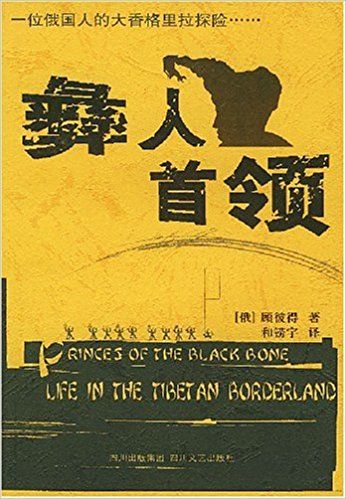
Another January reading entry is Peter Goullart’s Princes of the Black Bone, published in Chinese as 彝人首领. It raises a question about travel writing: when someone approaches an unfamiliar way of life, what do they see, and whose assistance makes that seeing possible?
Reading Notes: A Situated Account
Goullart’s English book was published in 1959. The Chinese edition records his encounters in Yi regions, including interactions with local leaders and other people. Its relationships and accounts of local life need to be understood within particular historical circumstances.
Travel writing offers a route into history. The author’s connections, judgments, and narration shape that route; it cannot be equated with a complete picture of a society. The following reflections develop this distinction.
Entering a Place Means Entering Relationships
A traveler can understand arrival as overcoming distance: crossing a mountain road brings a society closer. But introductions, trust, status, and etiquette also determine where someone can enter, whom they meet, and which stories they hear.
Firsthand observation matters without establishing that understanding is complete. It asks for examination of its conditions: who arranged the encounter, who interpreted, who could speak freely, and whose lives remained outside the account?
This does not cancel the value of travel writing. It gives observation more definite boundaries. Understanding where someone stands helps a reader see what that position illuminates and what it may conceal.
Whose Unfamiliarity Is It?
Mystery often gives travel narratives their appeal. But a society unfamiliar to a visitor need not be incomprehensible to those living within it.
Treating unfamiliarity as another people’s essence turns reading toward spectacle. Customs, dress, and beliefs become only what differs from my own, while practical reasons for living that way disappear.
I would rather use surprise to examine myself. Why was this unexpected? Where did my earlier image come from? Can I revise an expectation when someone contradicts it, rather than explaining them as an exception?
Approaching others may include giving up the demand that they continually demonstrate difference. Someone can remain connected to their culture while having ordinary hopes, uncertainties, and choices.
Whom Can a Leader Represent?
Leaders matter for understanding power and encounters. Entering a society through leaders also shapes a narrative’s emphasis.
People with resources, status, and authority can leave vivid portraits. Others may appear as background. Their experience of institutional costs and opportunities for change requires different routes of observation.
I want to distinguish judgments. A leader’s kindness to a visitor describes an encounter; it cannot establish that everyone experiences his power similarly. Respect for a person cannot replace examination of the arrangements in which they participate.
Reading needs both personal and relational complexity. Someone can possess courage, ability, and goodwill while the arrangements they inhabit still require scrutiny. Admiration and questions about power can coexist.
Tradition and Reform: Who Can Interpret Change?
Changes facing the book’s subjects prompt me to ask how reform should be evaluated. Wanting better lives matters, but progress also needs a concrete description.
Whose choices expand, and who loses earlier support? How do local people participate, and what objections can they raise? These questions return an abstract direction of change to actual relationships.
I do not want tradition preserved as a permanent specimen, or institutions arriving from elsewhere treated as automatically correct. Traditions may contain inequality, while reforms may bring new concentrations of power and dependence.
The question is whether people’s capacities to live and participate expand. Respect for culture includes respecting the right of those within it to change it. Supporting change also requires preventing it from enlarging options only for the powerful.
Sympathy Helps Understanding without Replacing Evidence
Feeling close to an author and their subjects is part of reading. It can also make explanations easier to accept.
A moving story and a well-supported historical judgment are related but distinct. Scenes, reported speech, recollection, and broad interpretation need different kinds of examination.
Writing about ethnic communities especially requires avoiding the expansion of individual behavior into a collective nature. Historical conditions change, and differences exist within groups. Descriptions that freeze those differences into fixed essences can create misunderstandings while appearing to explain.
Return the Power of Seeing to Relationships
The book makes me reconsider observation itself. Who could travel, record, and publish, and who appeared mainly as a subject of recording? That difference shapes how later readers understand a place.
I cannot easily dismiss an older record through a single present standard, or exempt it from examination because it is valuable. Responsible reading brings it into conversation with other records, local accounts, and experiences from different positions.
I want to keep a habit: when seeing a person, notice who introduces them; when hearing an explanation, ask who has not entered it.
Approaching others need not mean eventually possessing a complete answer about them. It can mean learning to describe more accurately what I know, while attending more seriously to voices I have not yet heard.