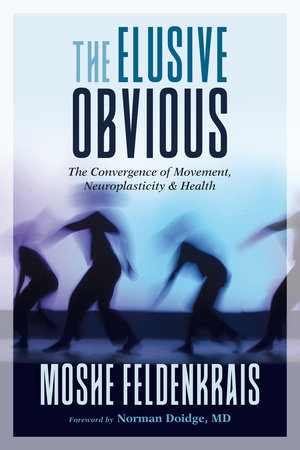
Reading Moshe Feldenkrais’s The Elusive Obvious: The Convergence of Movement, Neuroplasticity, and Health in October 2026, I want to stay with the tension in its title: why can something happening within my own experience remain so difficult to notice?
Familiar movements, habitual tension, and the impulse to push harder are close at hand. Their familiarity can make them disappear from attention. These notes reflect on movement, learning, and habit, with my own extensions into everyday life.
When Familiarity Becomes an Invisible Premise
The book explains the Feldenkrais Method and connects movement, learning, and health. Its two strands, Awareness Through Movement and Functional Integration, offer different approaches to bodily learning. The question I want to carry further is how someone discovers possibilities within an action they already know well.
I often confuse how I do something with what the task requires. Raising an arm seems to require tightening a shoulder; speaking seems to require an immediate answer; uncertainty seems to demand a complete plan. These responses may once have helped me. When alternatives cease to be noticeable, however, habit can narrow new experience.
Awareness begins, for me, by making familiarity observable again. Before judging an action, I can notice what actually happens: where effort begins, what else tightens, and when breathing changes. Once a detail becomes visible, a seemingly indivisible response may reveal parts that can be adjusted.
Noticing Differences Before Adding Effort
Difficulty usually prompts me to try harder. If the problem concerns coordination, greater effort may simply reinforce the existing approach.
I think of trying to explain something clearly while speaking faster because I fear being misunderstood. The missing condition may be time for the other person to respond. Adding more words can make the conversation harder to sustain.
Bodily exploration offers an analogy: make a trial small enough to perceive differences, then compare its effects with another approach. A modest change may produce no dramatic achievement, yet clarify where change is occurring.
A bodily experience cannot establish the effectiveness of a general life strategy. It gives me a practical question: before increasing effort, do I need more force, more information, or a different way to organize the action?
Learning Makes Choice Available in Practice
Knowing that an alternative exists differs from being able to use it. I may understand the value of listening, then immediately interrupt the next conversation. Understanding has not automatically become action.
I want to return change to particular experiences: hear one more sentence, try a different sequence of work, notice the relation between breathing and effort during a movement. Changing one thing at a time makes comparison possible, including noticing where an alternative does not help.
Neuroplasticity concerns functional or structural changes in the nervous system with experience, including learning. It does not imply unlimited reshaping or establish that a particular practice must work. For me, it is a reminder that a skilled response has a history, and a new ability also requires experience, time, and feedback.
The aim can therefore be broader than replacing every habit with a new standard posture. I want more ways of responding available to me. Being able to choose according to circumstances matters more than maintaining one supposedly correct performance.
Bodily Experience and Judgments About Myself
A local difficulty can quickly become a global judgment. An awkward movement makes me call myself clumsy; an unfinished task makes me doubt my willpower. Such judgments are compact, but they conceal processes that could be examined.
Returning to experience opens more useful questions. Am I tired, distracted, unfamiliar with the task, or lacking support? Is the approach unsuitable? Different causes require different responses. Saying that I am incapable provides little information about what to try next.
I also want bodily sensations to retain their complexity. Tension deserves attention without necessarily indicating danger. Ease is valuable without guaranteeing a sound judgment. Sensation can prompt inquiry alongside circumstances, evidence, and other people’s accounts.
Awareness need not become another demand to monitor myself constantly. I do not have to perform relaxation or treat every tense moment as failure. Noticing a response and finding an alternative when needed is already a change.
In Water: Noticing the Urge to Finish
Freediving brings these reflections into a setting where goals can shape attention. Depth, time, and execution readily become measures of a dive. When the result occupies all my attention, I may overlook how I enter the water, respond to uncertainty, or begin trying to prove something.
I think of preparation filled with expectations about what should be achieved that day. Every sensation can become either assistance or obstruction on the way to a target. I want to notice how that expectation affects movement and judgment before demanding that tension disappear.
Water changes support, orientation, and bodily position. Familiar effort on land may not suit a different environment. This offers a connection to learning: new circumstances call for renewed perception of relationships rather than a stronger repetition of an existing response.
A dive can also be considered through its process. Did I notice haste? Was I willing to change the plan? Did my judgment include my buddy and actual conditions? Such reflection is not a method for extending breath-holds or overriding warning signs. Awareness cannot replace safety procedures or buddy protection, and feeling calm does not establish underwater safety.
Choosing to end an attempt can therefore belong to freedom. The goal remains, without determining every present action.
On the Wall: Relating Effort to Position
Climbing suggests another connection. A difficult move can prompt a wish to grip harder or pull more forcefully. Yet difficulty may also concern footholds, weight distribution, direction, timing, and understanding the next movement.
I want to leave “I cannot use this hold” open as a question before deciding that I lack strength. Comparing approaches under safe practice conditions may help distinguish a strength limitation from a position that makes available strength difficult to use. These are questions prompted by the book’s learning theme, rather than universal technical answers for climbing routes.
Contact with the wall makes observation concrete: how hands and feet carry weight, where my gaze rests, and whether I tense everything before moving. I want to examine an unsuccessful attempt closely enough to find parts that can be explored, rather than turning it immediately into a judgment about myself.
Observation still needs boundaries. Fatigue, pain, protection, and fall conditions may require stopping. Completing a move cannot retrospectively prove that every preceding judgment was sound. The process deserves review alongside the result.
A Shared Question Across Different Environments
Freediving and climbing involve different conditions and cannot be approached through one bodily strategy. Both nevertheless remind me that my relationship with an environment changes, while a familiar response may arrive before I notice the change.
I want to become more responsive to those differences: allow a dive plan to change with conditions, and allow a difficult climbing move to prompt another approach. Effort can include observation, asking for help, and ending an attempt.
When achievement no longer carries all the meaning, there is room to examine what I learned. Learning may appear as a clearer understanding of why to continue and why to stop, even when it does not produce a deeper dive or a harder climb.
From Movement to Everyday Freedom
This book makes freedom more concrete for me. I may believe in choice while repeatedly following one familiar path: explaining when questioned, controlling when uneasy, accelerating when challenged.
Noticing the start of a response and trying another way brings choice into ordinary details. It might mean pausing, allowing a misunderstanding to be explored, or acknowledging the need for help.
Bodily learning cannot replace the material conditions of life. Time, resources, and power shape the choices genuinely available to someone. Examining my habits is one part of my responsibility; recognizing limitations that require collective change is another.
For October, I want to keep a small practice: when a familiar difficulty appears, observe my response and try one change small enough to compare. Let experience show what deserves to remain and what can be revised.
The actions I take for granted may still contain freedoms I have yet to learn.