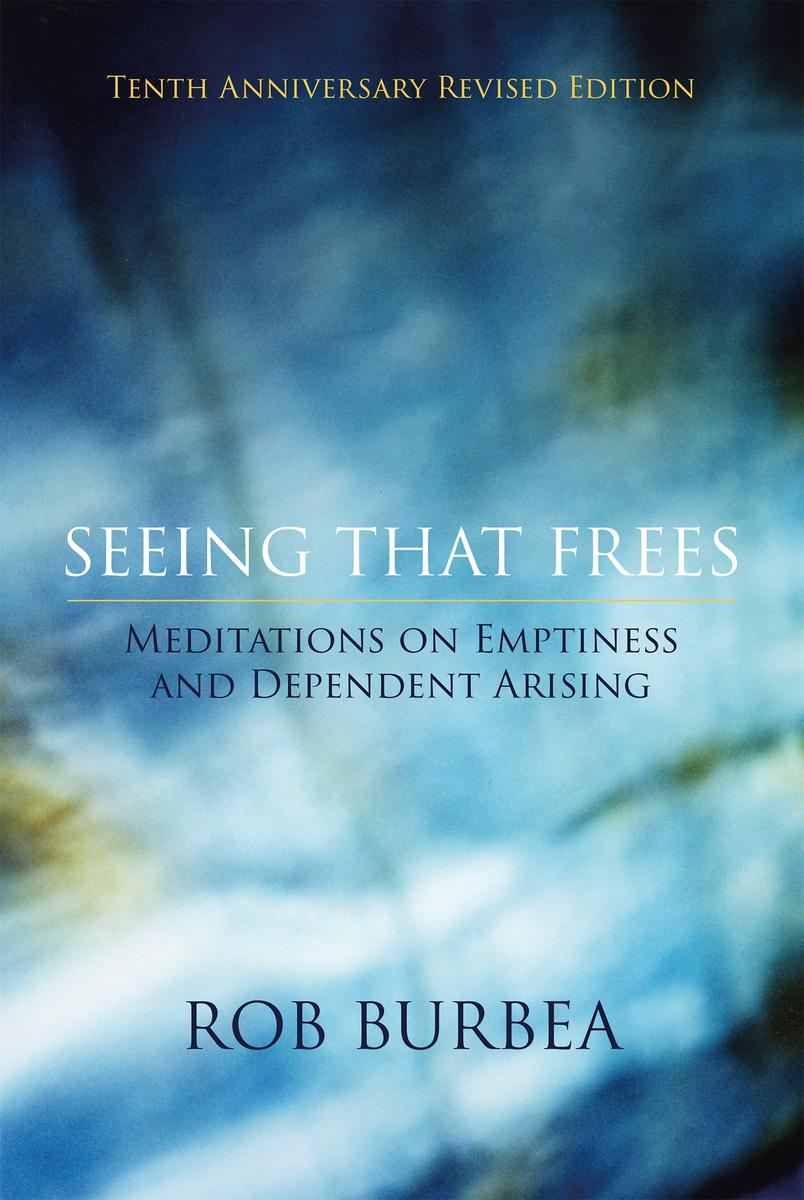
Another September reading entry is Rob Burbea’s Seeing That Frees: Meditations on Emptiness and Dependent Arising. It prompts a question: when facing an experience, must I always understand it through the ways of seeing I already know?
Reading Notes: Emptiness and Dependent Arising
The book centers on Buddhist teachings on emptiness and dependent arising. Through discussion and meditation practices, it gradually explores insight and liberation. It asks for time to digest; reading alone cannot replace practice.
Within this Buddhist context, emptiness can initially be understood as the absence of an independent, fixed, inherent essence. Dependent arising points to the conditions on which experiences and phenomena depend. Reading these ideas as meaning that nothing exists or nothing matters would lose their connection to life, responsibility, and practice.
The following reflections grow from these themes. Connections to everyday life and freediving are my own extensions, rather than diving arguments made in the book.
An Event and My Interpretation of It
In daily life, events quickly acquire conclusions. An expression receives no response, and I begin to question myself. An attempt goes badly, and I place it among the things I am supposedly not good at.
Yet there is still a distance worth observing between an event and its interpretation. A lack of response may involve another person’s situation, the timing of a conversation, or how something was expressed. The outcome of an attempt also involves preparation, environment, and the condition I was in.
What I take from this reading is an invitation to make judgment more specific. Before deciding what kind of person I am, I can ask: under what conditions did this result arise? Which facts do I know, and which assumptions have I added?
This does not guarantee that things will improve, but it can help me face them more clearly. Seeing conditions can also make the parts open to change easier to recognize.
Leave Room for Self-Understanding to Change
We need to understand ourselves in order to make choices. But self-understanding can restrict action when it becomes too fixed.
“I tend to feel anxious” can be useful information. If it becomes “I can only ever be this way,” past experience has made a decision on behalf of the future.
For me, dependent arising suggests a more careful set of questions. When is the anxiety stronger? What conditions lessen it? Is my response different when I am rested, prepared, or supported?
I do not have to deny the feeling or hurry to remove it. I can acknowledge present anxiety while noticing how it changes. Self-understanding becomes a record that can continue to be revised.
Freediving: Observe Experience, Respect Boundaries
Bringing these reflections into freediving, I think about how a goal shapes the meaning of a dive.
The same decision to turn back can be understood as failure or as a response to present conditions. The outcome still exists, and a training plan still matters, but I do not have to expand it into a judgment of my entire worth.
The distinction I want to notice is between facts and the stories added to them. My condition today, changes in the environment, and the clarity of communication are facts requiring serious assessment. “This proves I am not good enough” is an interpretation on another level.
I want to practice noticing these two layers of experience. Less self-blame may help return attention to what actually needs to be addressed. But this reflection on mindset cannot replace safety rules. Subjective calm, meditation experience, or an understanding of emptiness cannot establish that underwater breath-holding is safe. Freediving requires supervision by a qualified buddy or instructor.
Freedom Leaves Room for Understanding
The title Seeing That Frees connects freedom with the act of seeing.
I do not need to find a perspective that explains all of life at once. Perhaps I can begin with something smaller: pause before judging, examine conditions before evaluating myself, and allow another question to appear beside a familiar explanation.
This also requires honesty. A different interpretation cannot erase consequences or become a reason to avoid responsibility. Its value is in helping me respond more clearly to the facts while reducing added judgments that make action rigid.
I want to keep this reminder: experience can be taken seriously, and interpretation can be reconsidered. This moment may not have already decided everything that follows.