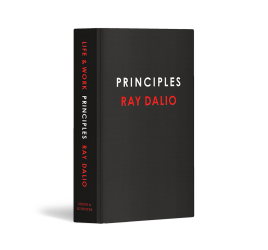
Reading Ray Dalio’s Principles: Life and Work in February, I want to ask how experience becomes a method, and how that method avoids becoming an answer that can no longer be questioned.
Reading Notes: Making Experience Discussable
The book combines personal history with life and work principles developed through Dalio’s experience, including building Bridgewater. He emphasizes facing reality, open discussion, and learning from experience. Radical transparency and an idea meritocracy are central to his proposed approach to collective decisions.
This is a practitioner’s system of experience. The author’s explanation of its effectiveness does not establish that every method works in every setting. What follows is my own analysis.
Writing a Principle Exposes a Judgment
An unexplained judgment can easily change its reasons after the outcome appears. When something succeeds, I claim foresight; when it fails, I describe exceptional circumstances.
Recording the basis of a decision can reduce that retrospective rewriting. It preserves what I knew, believed, and was willing to risk, rather than only what eventually happened.
A useful principle needs to be more specific than a slogan. Thinking carefully is hard to examine; listing evidence that could overturn an important judgment becomes an action. I want my principles to state both their conditions of use and their conditions of failure, so experience can revise them.
This distinguishes principles from self-image. If a principle exists only to prove that I am rational, brave, or honest, exceptions become difficult to admit. If it is a method for a particular class of problems, changing it need not mean rejecting myself.
A Good Outcome Does Not Prove a Good Decision
There is a distance between decision and outcome. Careful preparation can meet an unforeseen event, while a rushed choice can be lucky. Evaluating the process only by its final success makes luck look like ability.
Review therefore needs to return to the moment of decision: what information existed, which risks were foreseeable, and which alternatives were considered? The question is whether judgment was reasonable under those conditions.
But this cannot become an endless defense of myself. Repeated problems require checking whether supposed surprises have become recognizable patterns. Acknowledging uncertainty and learning from repeated outcomes need to coexist.
Successful people’s experience deserves the same reading. A principle appearing alongside success does not establish that it caused success. I can borrow a method without borrowing every explanation its author gives for the results.
Open Discussion Requires Safe Disagreement
Openness is often described as a personal quality: listening to others and admitting mistakes. Within organizations, speaking also depends on arrangements of power.
If disagreement with a superior can affect evaluation or employment, silence need not mean agreement. Calling it a lack of courage overlooks unequal risk.
I therefore understand openness as a relationship requiring institutional support. Are those raising questions protected? Do evaluators expose their own mistakes? Can disagreement receive independent review?
When only one side must reveal weaknesses while the other controls interpretation and punishment, transparency can increase control. It needs defined scope, purpose, and boundaries, along with space in which a person does not have to defend every aspect of themselves.
Who Decides Who Is Credible?
Giving different opinions different weights may distinguish among judgments. But it introduces another question: who defines credibility, on what basis, and can the assessment be challenged?
Experience in one domain does not establish reliability in another. Ability demonstrated under stable conditions may not remain effective after conditions change. If past achievement permanently purchases greater authority, new information can struggle to enter.
I prefer credibility to be specific, limited, and revisable. It should relate to the question, explain evidence and reasons, and allow counterexamples to change its weight.
Organizations also need to examine a possible circle: powerful people define standards that then establish why powerful people deserve trust. The rules themselves must be discussable, alongside judgments of whether people meet them.
Reflecting on Pain Does Not Justify Harm
Difficulty can lead to understanding, but learning is not an automatic product of pain. Rest, support, explanation, and opportunities to try differently also matter.
An environment that repeatedly causes harm while demanding growth can use reflection to deflect scrutiny. Every question becomes what someone learned, while why the situation keeps recurring goes unexamined.
I want review to examine personal judgment alongside tasks, resources, and relationships. Avoidable harm should be reduced. Learning from difficulty cannot establish that the arrangement producing it is reasonable.
Before Optimizing, Examine the Goal
The more effective a method becomes, the more its purpose deserves scrutiny. Efficiency can help complete important work, or complete something unworthy more quickly.
Life’s goals do not always share a single measure. Income, relationships, health, exploration, and rest can genuinely conflict. Choices need to explain value judgments; an algorithm cannot relieve me of responsibility for them.
Organizations face similar questions. A decision can improve performance while leaving costs with people who have little voice. Assessing only whether the target was reached can keep those costs outside the method’s view.
Let Principles Remain Revisable
I want three tests for my principles: what specific problem does this address, what evidence would make me revise it, and who bears the costs of implementing it?
The first prevents decoration, the second prevents dogma, and the third prevents effectiveness from being assessed only from the rule-maker’s position.
Principles encourages me to make judgment clearer and review it consistently. I also want to retain the freedom to change once-useful methods when reality, values, or relationships make new demands.
Perhaps a mature set of principles reveals itself in how it meets the moment when it no longer applies.